How to become an ad copywriter is a question that thousands of digital marketers ask themselves every year, and the answer has changed dramatically in the past decade. The role no longer sits exclusively in Madison Avenue agencies. Today, ad copywriters work inside startups, e-commerce brands, agencies, and even as freelancers generating six-figure incomes from their laptops.
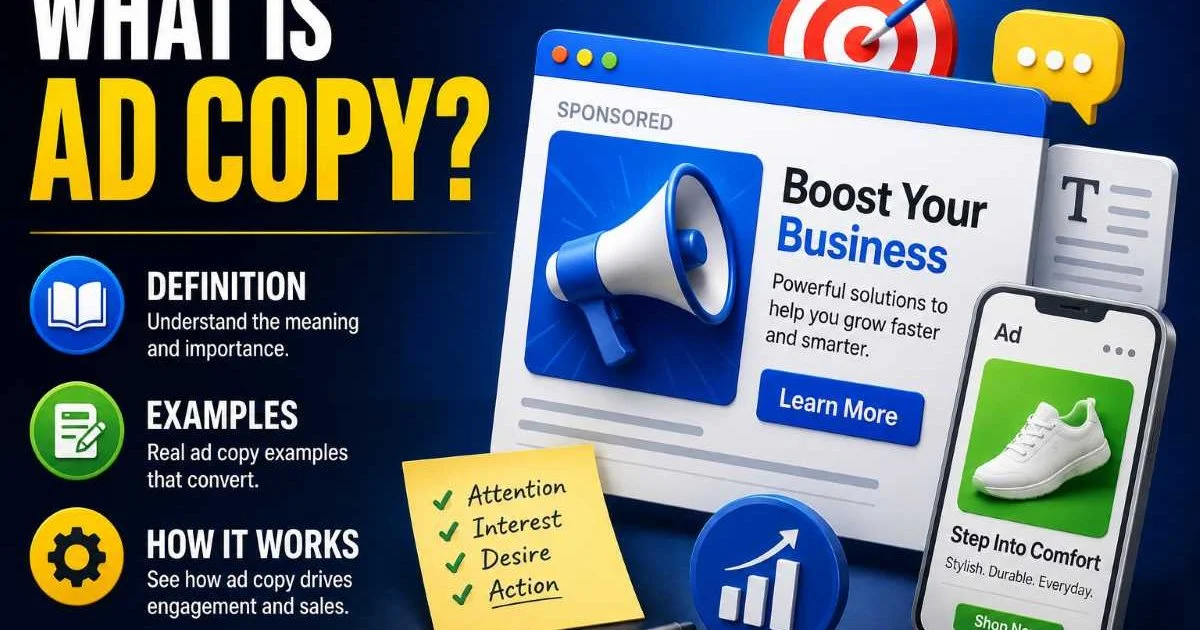
If you understand what ad copy is, how it works, and why it matters, you already have a head start. The demand is real: the U.S. Bureau of Labor Statistics projects steady growth for writers and authors through 2032, and the rise of paid social and search advertising has made copywriting skills more valuable than ever.
This guide breaks the path into four concrete steps you can start today, whether you're pivoting from another marketing role or starting from scratch.
Key Takeaways
- Ad copywriting blends persuasion psychology with platform-specific formatting rules and character limits.
- A strong portfolio of spec ads matters more than a degree for landing your first clients.
- Mastering Google Ads and Meta Ads copy covers roughly 80% of market demand.
- AI writing tools accelerate drafting but cannot replace strategic thinking or brand voice.
- Continuous A/B testing separates good copywriters from great ones over time.

Step 1: Build Your Copywriting Foundation
Essential Books and Courses
Every skilled ad copywriter stands on a foundation of direct response principles that date back over a century. Start with three books that most working copywriters consider essential: "Ogilvy on Advertising" by David Ogilvy, "The Adweek Copywriting Handbook" by Joseph Sugarman, and "Breakthrough Advertising" by Eugene Schwartz. These aren't dusty relics. The psychological triggers they describe (curiosity, urgency, social proof, specificity) still drive modern ad performance across every digital platform.
Beyond books, structured courses accelerate your learning curve. Google's Skillshop certification teaches you how Responsive Search Ads work, which character limits apply, and how headlines rotate. Meta Blueprint covers the nuances of writing for Facebook and Instagram placements. Both are free, and completing them gives you a credential that hiring managers actually recognize. If you want paid training, CopyHackers offers an excellent conversion copywriting program that many agency recruiters value highly.
Understand Buyer Psychology
Good copy speaks to a specific person at a specific stage of awareness. Schwartz's five levels of awareness (unaware, problem-aware, solution-aware, product-aware, most aware) should guide every ad you write. A cold audience on Facebook needs a different hook than a warm retargeting audience who already visited your pricing page. Understanding this spectrum is what separates a copywriter from someone who simply strings words together. Study real ad libraries, especially Meta's Ad Library and Google's Ads Transparency Center, to see how top brands adjust messaging per audience segment.
Spend 30 minutes each week browsing Meta Ad Library for your target industry. Screenshot the best-performing patterns you notice and file them by format.
Knowing how to become an ad copywriter means accepting that you'll never stop studying. Buyer behavior shifts with culture, technology, and economic conditions. The copywriter who wrote winning ads in 2019 had to rewrite their entire playbook during 2020. Build a habit of reading marketing case studies weekly, whether from sources like MarketingProfs, Copyblogger, or the brands you personally admire. This ongoing education is what keeps your copy relevant and sharp.
Step 2: Master Platform-Specific Ad Formats
Google Ads Copy
Google Ads demand precision. Responsive Search Ads allow up to 15 headlines (30 characters each) and 4 descriptions (90 characters each). Writing within these tight constraints is a skill that takes practice. Your headlines need to include the target keyword naturally while communicating a clear benefit or differentiator. If you're new to the format, studying proven Google Ads copy tips to lower your cost per click will give you a practical framework to follow immediately.
Specificity wins on Google. Instead of writing "Great Prices on Shoes," write "Running Shoes from $49, Free 2-Day Shipping." Numbers, prices, timeframes, and guarantees outperform vague claims consistently. Pin your strongest headlines to positions one and two so Google always shows them. Test different calls to action (Shop Now, Get a Quote, Start Free Trial) because the right CTA can improve click-through rates by 20% or more depending on your industry.
Facebook and Instagram Ad Copy
Meta platforms reward conversational, story-driven copy. Unlike Google, where users search with intent, Facebook and Instagram users are scrolling passively. Your first line has to stop the thumb. Opening with a question, a bold claim, or a relatable problem statement works far better than leading with your brand name. The detailed strategies behind writing Facebook ad copy that converts fast are worth studying before you draft your first campaign.
Length varies by objective. Lead generation ads often perform well with longer copy (150 to 300 words) because you need to build enough trust for someone to hand over their email. E-commerce ads for impulse-buy products can work with just two punchy sentences and a strong CTA. Always write multiple variants so the algorithm can optimize delivery. Three to five copy variations per ad set is a solid starting point for any campaign you run.
| Platform | Headline Limit | Description Limit | Primary Text |
|---|---|---|---|
| Google RSA | 30 characters | 90 characters | N/A |
| Facebook/Instagram | 40 characters (recommended) | 30 characters | 125 characters visible |
| LinkedIn Ads | 70 characters | 100 characters | 150 characters visible |
| Microsoft Ads | 30 characters | 90 characters | N/A |
Character "limits" on Meta platforms are recommendations, not hard caps. You can write longer, but text gets truncated behind a "See More" link.
Step 3: Create a Portfolio That Gets You Hired
Spec Ads vs. Live Campaigns
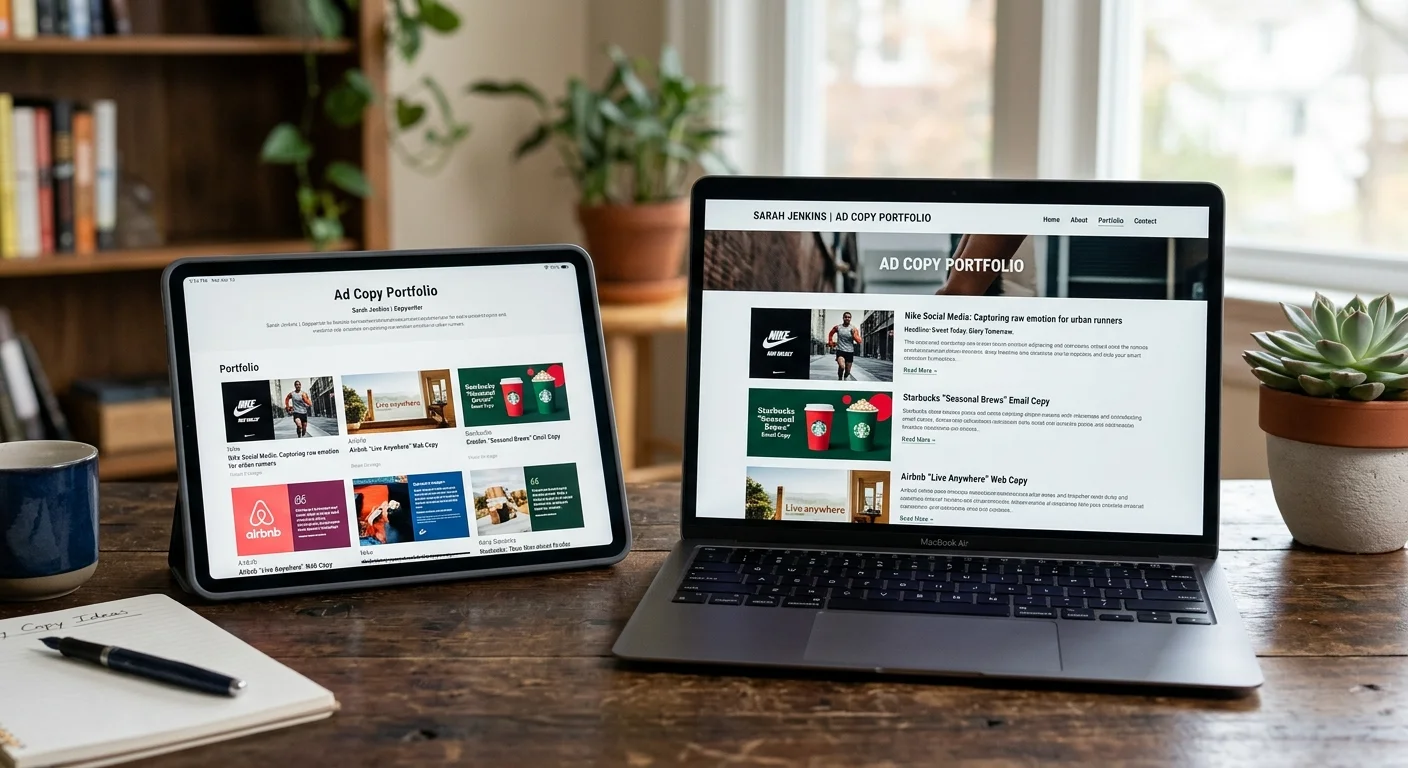
You don't need a paying client to build a portfolio. Pick five brands you admire and write spec ad campaigns for them. For each brand, produce a Google Search Ad set (five headlines and two descriptions), a Facebook ad with three copy variations, and a set of ad headlines using proven formulas that drive clicks. Present them in a clean PDF or simple website. Hiring managers care about your thinking process, not whether the ads ran live.
When you can, run real campaigns with small budgets. Even $50 on a Facebook campaign for a local business or a personal project gives you actual performance data to discuss in interviews. Being able to say "I tested three hooks and the problem-agitation hook delivered a 4.2% CTR versus 2.1% for the benefit-first hook" makes you instantly more credible than someone who only shows hypothetical work. Data-backed results are the strongest portfolio asset you can have.
"The best ad copywriters don't just write well; they test relentlessly and let data overrule their instincts."
Structure your portfolio around outcomes, not vanity. For each project, include the brief (what was the goal), the copy you wrote, and the results (or your rationale if it's spec work). Three to five strong case studies beat twenty random ad screenshots. Include at least one Google Ads example and one social ad example to show platform versatility. If you've worked across different industries (SaaS, e-commerce, local services), highlight that range because it signals adaptability.
Learning how to become an ad copywriter also means knowing how to present your work. Use a simple portfolio site on platforms like Carrd, Notion, or a basic WordPress page. Avoid flashy designs that distract from the copy itself. Your words are the product; let them stand front and center. Include a short "About" section that explains your approach to copywriting and what makes your perspective unique.
Step 4: Land Clients and Grow Your Career
The first clients are always the hardest to find. Freelance platforms like Upwork and Fiverr can provide initial projects, though rates start low (typically $25 to $75 per ad set). The real value of these early gigs is testimonials and case studies. After completing five to ten projects with positive reviews, you can raise your rates significantly. Many experienced freelance ad copywriters charge $500 to $2,000 per ad set once they have a track record of delivering results.
Agency roles offer a faster learning curve. Junior copywriter positions at digital agencies expose you to dozens of clients, multiple industries, and rigorous feedback from creative directors. You'll learn to write under pressure, meet tight deadlines, and adapt your voice quickly. Salaries for junior ad copywriters in the U.S. range from $40,000 to $55,000, with senior positions reaching $80,000 to $110,000 depending on location and specialization. In-house brand roles often pay similarly but offer more stability.
Using AI Tools to Scale Your Output
AI writing tools have become a practical part of the modern copywriter's workflow. Tools like AI Ad Copy Generator can produce first drafts of headlines, descriptions, and hooks in seconds. This frees you to focus on strategy, audience research, and the creative refinement that machines still can't replicate. If you're curious about how different AI platforms compare for writing tasks, a detailed comparison of Claude vs. Phrase provides useful context on strengths and limitations.
Use AI tools for first drafts and brainstorming variants, then manually refine for brand voice, emotional resonance, and platform-specific best practices.
Knowing how to become an ad copywriter in 2024 and beyond means embracing these tools without becoming dependent on them. The copywriters who thrive will use AI to handle volume while investing their own time in strategic decisions: which angles to test, which audiences to target, and which emotional triggers to pull. Think of AI as your research assistant, not your replacement. Clients pay premium rates for strategic thinking, not word output alone.
Networking remains underrated as a growth strategy. Join copywriting communities on Slack (like Superpath or The Copywriter Club), attend virtual marketing conferences, and engage with other copywriters on LinkedIn. Many freelance ad copywriters report that 60% or more of their clients come from referrals rather than job boards. Building genuine relationships with media buyers, creative directors, and marketing managers creates a pipeline that job applications alone never will.
Frequently Asked Questions
?How do I build a portfolio without any live ad campaigns?
?Are Google Skillshop and Meta Blueprint certifications worth it?
?How long does it realistically take to land a first copywriting client?
?Can AI writing tools replace the need to learn buyer psychology?
Final Thoughts
How to become an ad copywriter comes down to four actions: study the fundamentals, master the platforms, build a portfolio with real or spec work, and put yourself in front of clients and employers consistently.
The field rewards people who combine creative instinct with data-driven decision-making. You don't need a specific degree or years of agency experience to start. Write your first spec ad today, test it if you can, and let the results teach you what no course ever will.
Disclaimer: Portions of this content may have been generated using AI tools to enhance clarity and brevity. While reviewed by a human, independent verification is encouraged.