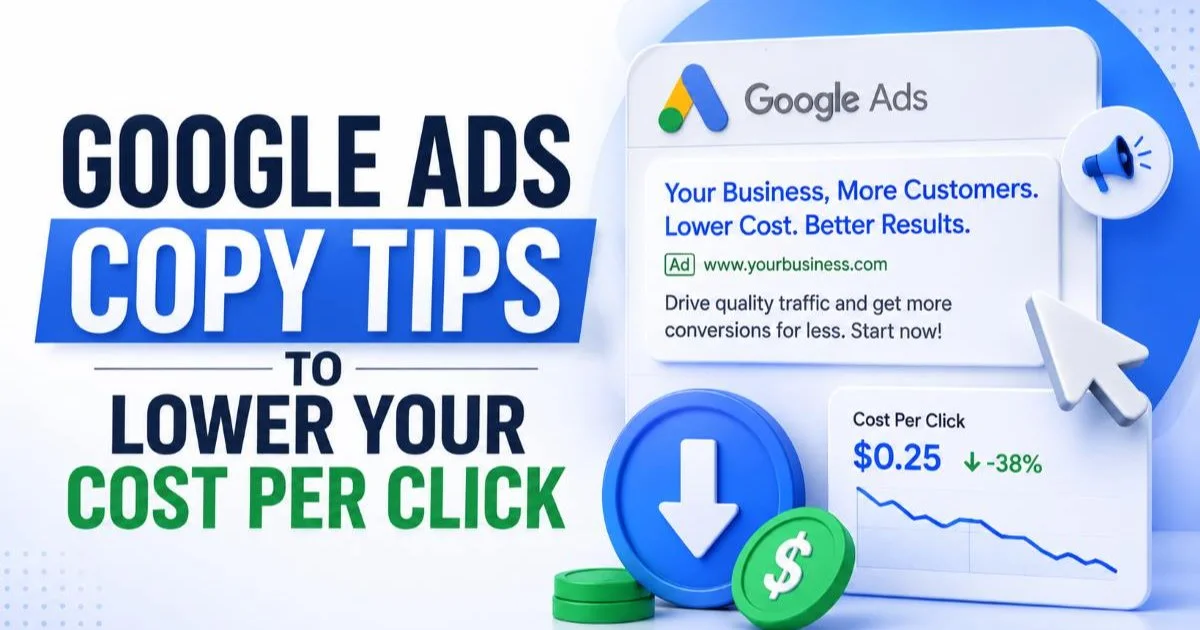
Google Ads copy tips to lower your cost per click can transform your advertising budget from a money pit into a well-oiled machine. Every dollar you spend on paid search matters, and the words you choose for your ads directly influence how much you pay per click. Google rewards relevance. When your ad copy aligns tightly with user intent and your landing page, your Quality Score rises and your CPC drops.
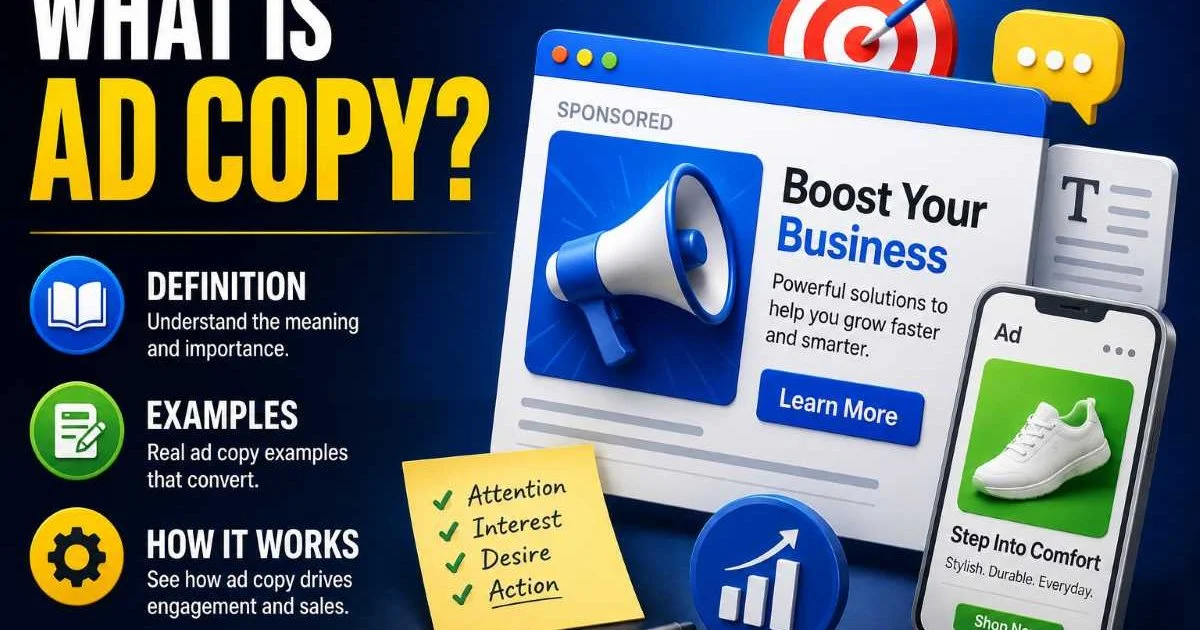
Most advertisers focus exclusively on bidding strategies while ignoring the single most controllable factor in their campaigns: the copy itself. Understanding how ad copy works and why it matters is the foundation you need before optimizing any campaign. This guide walks you through four concrete steps to write better Google Ads copy that actually reduces what you pay for each visitor.
Key Takeaways
- Higher Quality Scores from better ad copy can reduce your cost per click by 50% or more.
- Including your primary keyword in headlines directly improves click-through rate and relevance.
- Emotional triggers and specific numbers in ad copy consistently outperform generic messaging.
- Testing at least three ad variations per ad group prevents wasted spend on underperforming copy.
- Writing ad headlines that match search intent signals relevance to Google's auction algorithm.
Step 1: Align Ad Copy with Quality Score Factors
Understand What Quality Score Measures
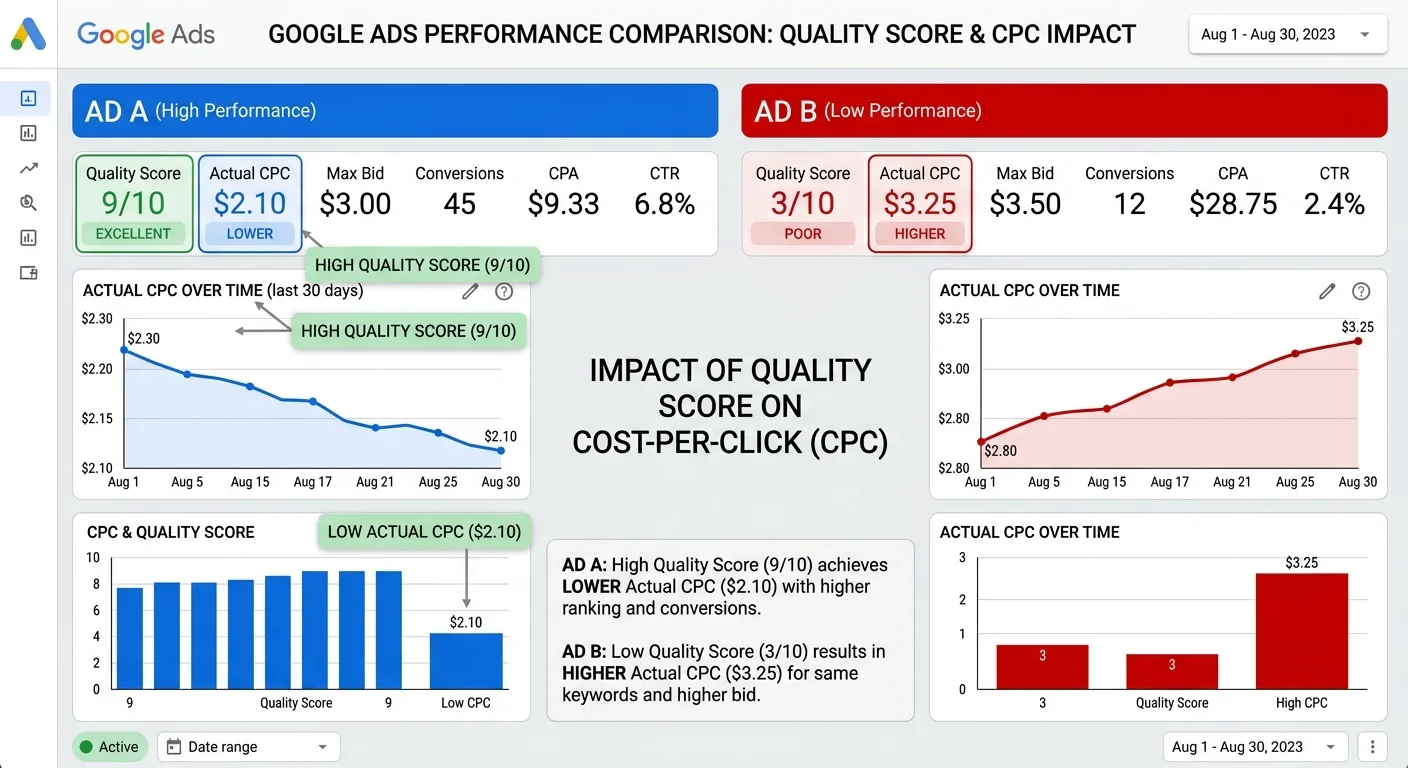
Google's Quality Score is rated on a scale of 1 to 10, and it directly determines your ad rank and CPC. Three components feed into it: expected click-through rate, ad relevance, and landing page experience. Your ad copy influences two of these three components. A Quality Score of 7 or above can cut your cost per click by 28% to 50% compared to the benchmark, while scores below 5 will inflate your costs significantly.
Most ad copywriters overlook the tight relationship between keyword groups and ad text. If you're running a campaign targeting "affordable CRM software," your ad copy needs to include that exact phrase or a close variant. Stuffing unrelated selling points into your headline wastes precious character space and dilutes relevance. Google's algorithm literally scores how well your copy matches the triggering keyword, so treat keyword-to-ad alignment as your top priority.
Write for Relevance First
Relevance is not about creativity. It's about precision. Break your ad groups into tightly themed clusters of 10 to 15 keywords maximum, then write ad copy specifically for each cluster. A common mistake is writing one generic ad and applying it across dozens of keywords. That approach tanks your Quality Score and raises CPC across the board. Smaller ad groups with tailored copy consistently outperform broad, lazy structures.
Use Google's Keyword Insertion feature ({KeyWord:Default}) in headlines to dynamically match your ad text to the user's exact search query.
Your landing page also matters for Quality Score, but here's the part most people miss: message match between ad copy and landing page headline affects bounce rate, which feeds back into Google's scoring. If your ad promises "Free 14-Day Trial," that exact phrase should appear above the fold on your landing page. This one practice alone can boost your Quality Score by 1 to 2 points. Check out this comprehensive list of Google tools to find diagnostic utilities that help you monitor Quality Score at the keyword level.
Step 2: Write Ad Headlines That Match Search Intent
Mirror the User's Query
Your headline is where Google Ads copy tips to lower your cost per click produce the most immediate results. Headlines account for roughly 80% of whether someone clicks your ad, and Google bolds keyword matches in the search results. This visual emphasis increases CTR, which signals to Google that your ad is relevant. A higher expected CTR directly lowers what you pay. Write ad headlines that echo the searcher's language rather than your internal marketing jargon.
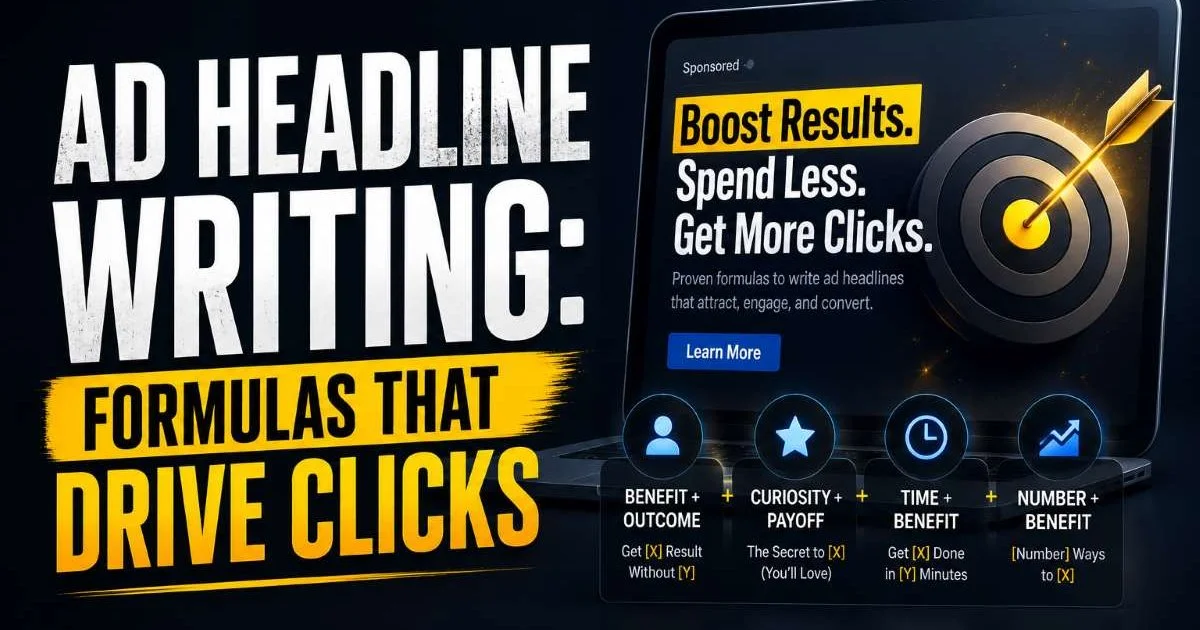
Consider the difference between "Our Software Platform" and "Affordable CRM for Small Teams." The first headline tells Google nothing about relevance. The second mirrors what someone actually types into the search bar. With Responsive Search Ads, you get up to 15 headline slots. Use them strategically by including keyword variants, benefit statements, and brand differentiators. Pin your most relevant keyword headline to Position 1 to guarantee it always shows.
Use Numbers and Specificity
Specific numbers consistently beat vague claims in ad copy writing. "Save 37% on Shipping" outperforms "Save Money on Shipping" because the brain processes concrete figures faster than abstract concepts. Include pricing, percentages, time frames, or customer counts whenever possible. Ads with numbers in headlines see CTR improvements of 15% to 30% on average, which compounds into lower CPCs over time through improved Quality Scores.
Time-sensitive language also drives urgency without resorting to clickbait. Phrases like "Limited Spots," "Ends Friday," or "2024 Pricing" create natural urgency. Google Ads copy that combines specificity with urgency tends to dominate auction rankings because it attracts intentional clicks, not casual browsers. Intentional clickers convert better, which means your ROAS improves alongside your CPC reduction.
"The best-performing Google Ads don't just target keywords; they mirror the exact conversation happening inside the searcher's mind."
Step 3: Craft Descriptions with Emotional Triggers and Clear CTAs
Emotional Hooks That Drive Action
Descriptions give you 90 characters per line across two lines in Responsive Search Ads. That's limited real estate, so every word must earn its place. Emotional triggers work because people make decisions emotionally and justify them logically. Fear of missing out, desire for status, frustration with current solutions: these psychological levers move people from scanning to clicking. An ad copywriter who understands emotional framing will consistently produce lower-CPC campaigns.
Frame your description around the problem the searcher is trying to solve, not just the features you offer. Instead of "Cloud-Based Project Management Tool," try "Stop Losing Track of Deadlines. Manage Everything in One Place." The first is a category label. The second speaks directly to a pain point. Pain-driven copy generates higher engagement, which Google reads as relevance, which brings down your cost per click. This psychological approach applies equally whether you write ad copy for Google or other platforms.
CTA Formulas That Work
Your call-to-action needs to do two things: tell the user exactly what happens next and reduce the perceived risk of clicking. "Start Your Free Trial" works better than "Learn More" because it sets a clear expectation. "Get a Custom Quote in 60 Seconds" outperforms "Contact Us" because it quantifies the commitment. The best CTAs combine an action verb, a benefit, and a time frame or qualifier. This formula applies across nearly every industry.
Avoid misleading CTAs that promise something your landing page doesn't deliver. Google can penalize your ad rank for poor landing page experience, which increases CPC.
Testing different CTA styles within the same ad group reveals what your specific audience responds to. B2B audiences often prefer risk-reducing language ("No Credit Card Required"), while ecommerce shoppers respond better to urgency and discount-focused CTAs. Don't assume; let the data tell you what works. Run each variation for at least two weeks or until you reach 1,000 impressions before drawing conclusions about performance differences.
Step 4: Test, Iterate, and Kill Underperformers
Structure Your Testing Framework
Google Ads copy tips to lower your cost per click only work if you treat optimization as an ongoing process. Run at least three ad variations per ad group at all times. Google's machine learning will automatically distribute impressions toward the best performers, but you need enough variations to give the algorithm meaningful choices. Set your ad rotation to "Optimize" so Google prioritizes the highest-performing copy, then review results weekly to identify patterns.
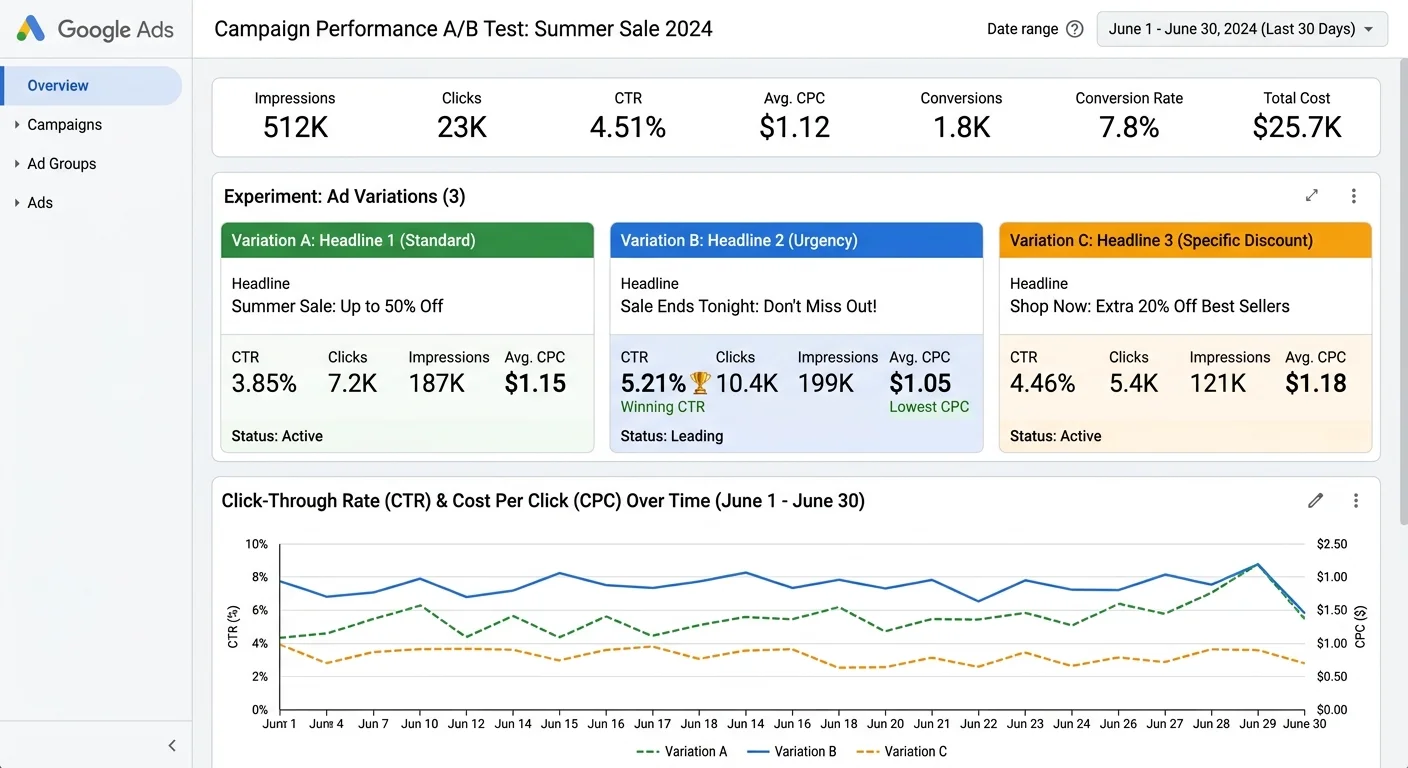
Test one variable at a time. If you change both the headline and description simultaneously, you won't know which change drove the result. Start with headlines since they have the highest impact on CTR. Once you identify winning headline patterns, move to descriptions. Then test CTAs. This sequential approach builds a knowledge base over time about what your audience actually responds to, rather than guessing based on industry best practices alone.
Know When to Cut
Kill underperforming ads ruthlessly. If an ad variation has a CTR below your ad group average after 1,000 impressions, pause it and replace it with a new test. Keeping low-CTR ads running actively hurts your Quality Score across the entire ad group. Many advertisers are too sentimental about their copy. The data doesn't care what you think sounds clever; it only cares about what drives clicks and conversions at the lowest possible cost.
Don't pause ads too quickly. Statistical significance requires at least 100 clicks per variation for reliable CPC comparisons. Premature decisions lead to false conclusions.
Document your findings in a simple spreadsheet: date, ad variation, headline text, description text, CTR, CPC, and conversion rate. After three to six months, clear patterns will emerge about what language, structure, and emotional angles work best for your audience. This institutional knowledge becomes your competitive advantage. Competitors who don't test systematically will always pay more per click than you do because they're relying on assumptions instead of evidence.
Frequently Asked Questions
?How do I use Keyword Insertion without making my ads look awkward?
?Is improving ad copy more effective than adjusting bids to lower CPC?
?How long does it take for Quality Score improvements to lower my CPC?
?Does splitting into smaller ad groups really matter if my CTR is already decent?
Final Thoughts
Google Ads copy tips to lower your cost per click come down to relevance, specificity, emotional resonance, and relentless testing. None of these require a bigger budget; they require more thoughtful writing and a willingness to let data guide your decisions.
Start by tightening your ad groups and matching your copy precisely to keyword intent. Then build a testing habit that runs continuously, week after week. The advertisers who pay less per click aren't necessarily smarter; they're simply more disciplined about the process.
Disclaimer: Portions of this content may have been generated using AI tools to enhance clarity and brevity. While reviewed by a human, independent verification is encouraged.