Ad copy writing is the process of creating short-form persuasive text designed to capture attention, communicate value, and drive a specific action across advertising platforms. Whether you're crafting Facebook ads, Google Search campaigns, or TikTok promotions, the discipline of ad copy writing sits at the center of every paid media strategy.
For digital marketers, understanding this skill isn't optional; it directly determines whether your budget generates returns or gets wasted on impressions that never convert. The stakes are real: a single headline change can swing click-through rates by 30% or more.
This article breaks down what ad copy writing actually involves, how it works across platforms, why it matters for your bottom line, and how to avoid the most common mistakes marketers make when writing ads. Consider this your foundational reference.
Key Takeaways
- Ad copy writing combines headlines, descriptions, hooks, and CTAs into a persuasive unit.
- Each advertising platform has unique format constraints that shape how you write copy.
- Strong marketing hooks stop the scroll and earn attention within the first two seconds.
- Testing multiple product angles consistently outperforms relying on a single message.
- AI-powered tools can accelerate ad copy production without sacrificing quality or brand voice.
How Ad Copy Writing Works
Anatomy of an Ad
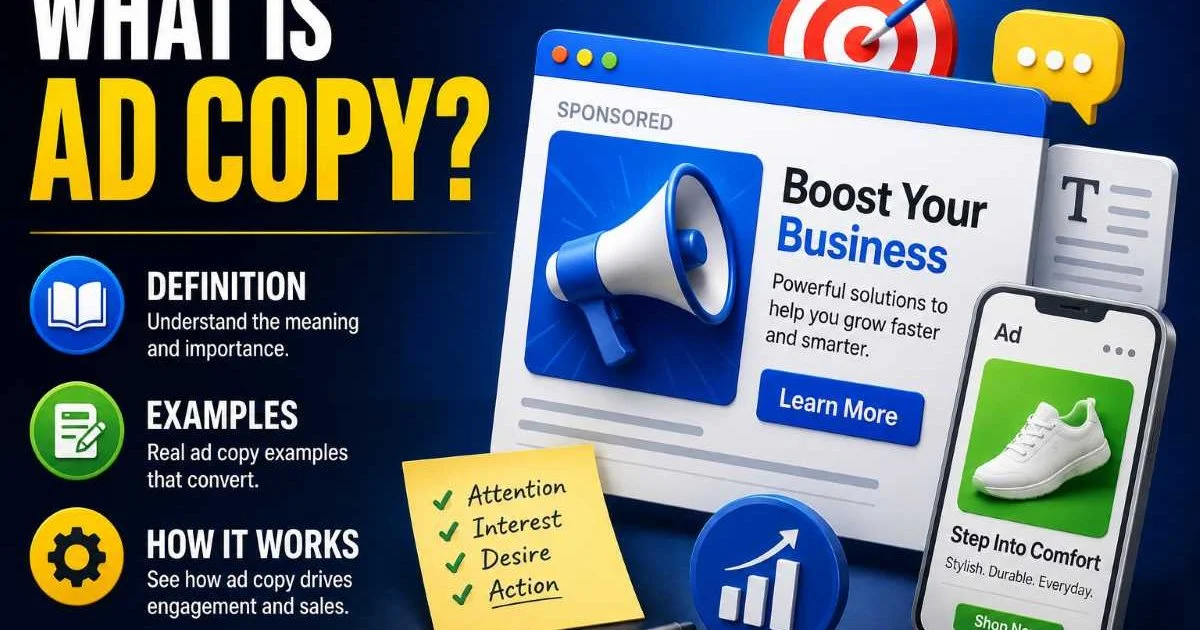
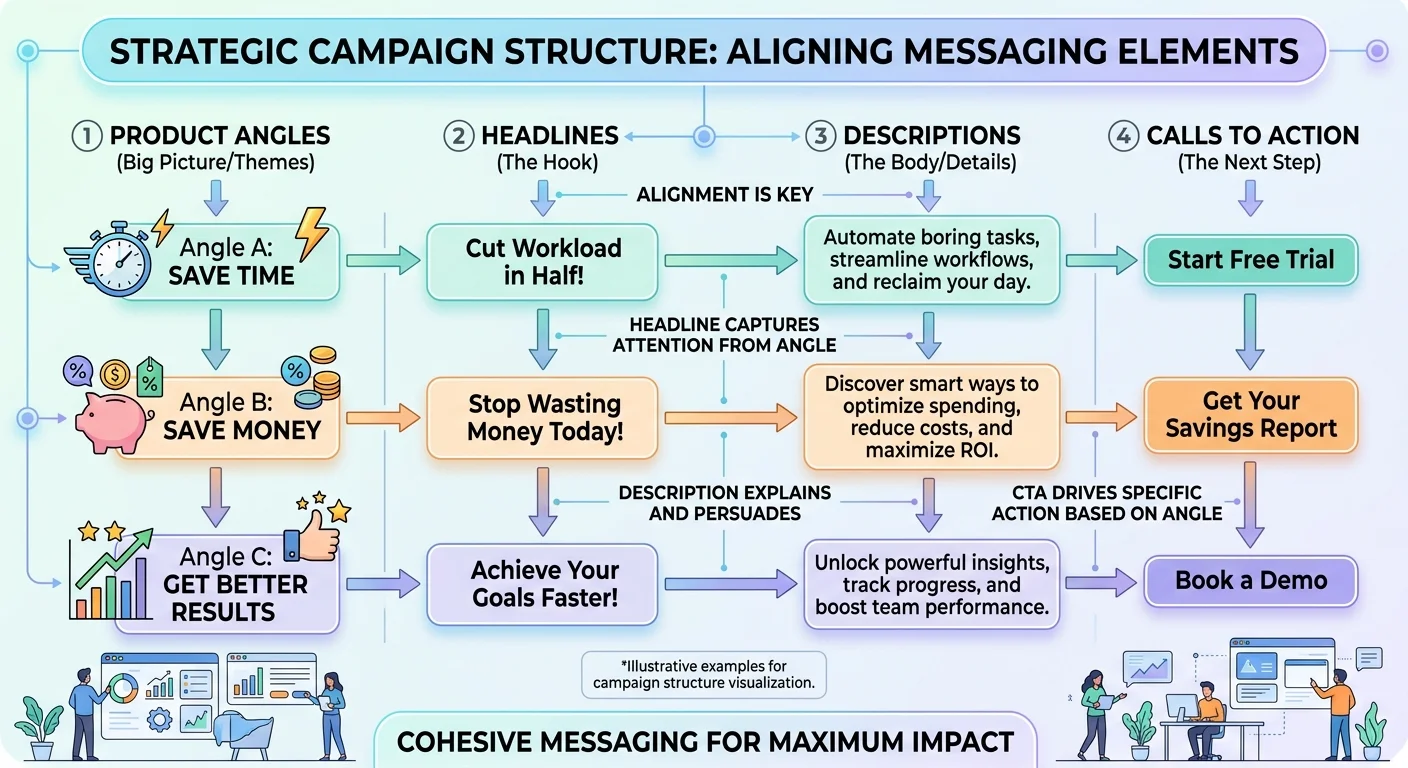
Every advertisement, regardless of platform, is built from a handful of core components. The headline grabs attention. The description expands on the promise. The hook (often the first line or visual text) earns the pause. And the call-to-action tells the viewer exactly what to do next. These elements work together as a system, not in isolation. When one component fails, the entire ad underperforms, no matter how strong the others are.
Advertising headlines carry the heaviest burden because they're often the only text a user reads before deciding to engage or scroll past. Research from Microsoft Advertising shows that headline variations account for up to 80% of performance differences in search campaigns. Ad descriptions, meanwhile, provide the supporting evidence: social proof, feature details, urgency cues, or pricing information that reinforces the headline's promise.
CTA examples range from the direct ("Buy Now," "Start Free Trial") to the curiosity-driven ("See How It Works," "Get Your Score"). The best CTAs match the user's stage in the buying journey. Someone seeing your brand for the first time responds differently than a retargeting audience that already visited your product page. Matching intent to CTA language is a fundamental part of campaign copywriting that many advertisers overlook.
Write at least three CTA variations per ad set and let the platform's algorithm identify the winner through split testing.
Platform-Specific Formats
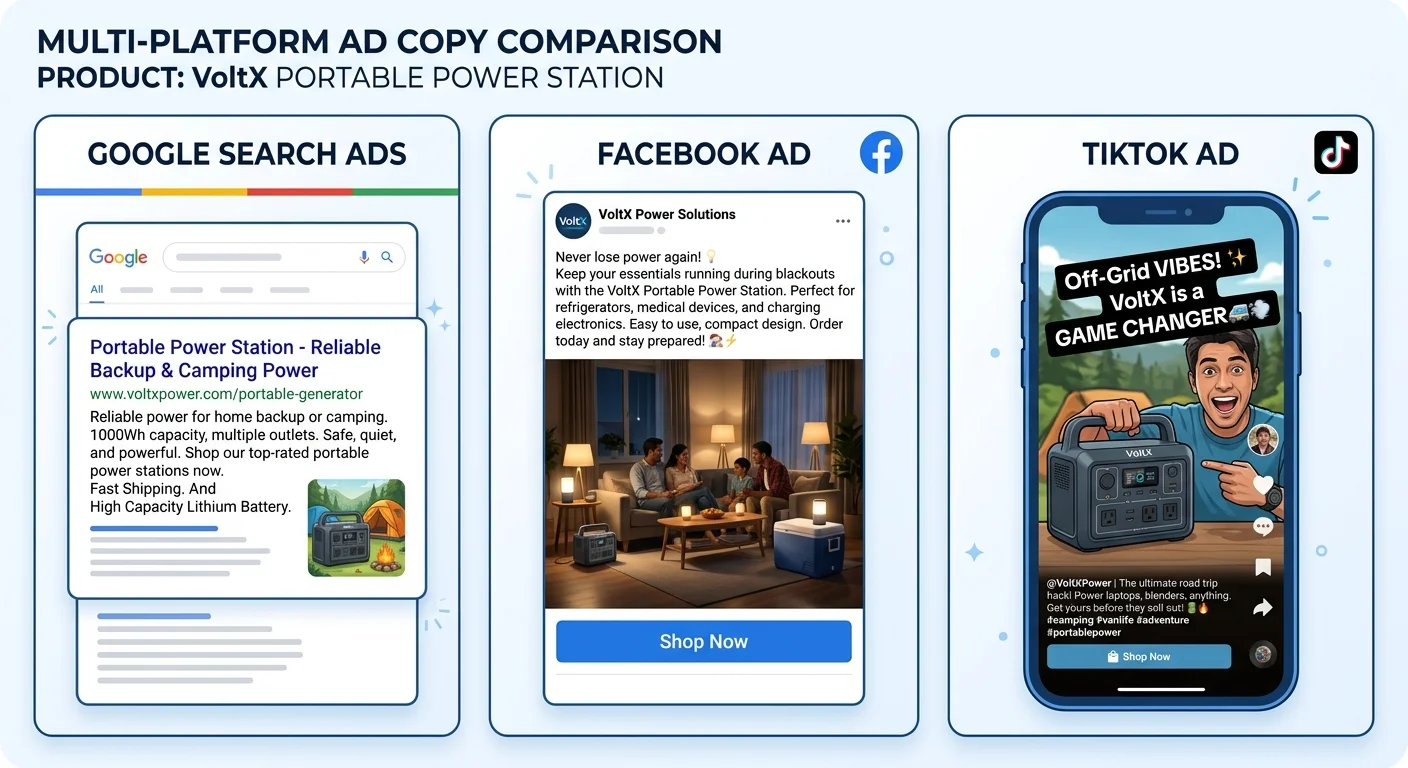
Platform constraints shape everything. Google Search ads give you 30-character headlines and 90-character descriptions. Meta ads allow longer primary text but compete with images and video for attention. LinkedIn sponsored content demands a more professional tone. TikTok ads need to feel native, informal, and fast. Understanding these format requirements is the first step in effective ad copy writing, because a headline that works on Google often falls flat on Instagram.
| Platform | Headline Limit | Description Limit | Primary Hook Location |
|---|---|---|---|
| Google Search | 30 characters | 90 characters | Headline 1 |
| Meta (Facebook/IG) | 40 characters recommended | 125 characters primary text | First line of primary text |
| LinkedIn Sponsored | 70 characters | 150 characters intro | Intro text |
| TikTok Ads | No strict limit | 100 characters recommended | First 2 seconds of video/text overlay |
| YouTube Pre-roll | 15 characters display | Companion banner | First 5 seconds of video |
Why Ad Copy Writing Matters for Marketers
Performance Impact
The difference between good and mediocre ad copy isn't subjective; it shows up in your metrics within days. Campaign copywriting directly affects click-through rate, cost per click, quality score (on Google), and ultimately conversion rate. Facebook's own case studies have shown that refreshing ad creative, including copy, can reduce cost per acquisition by 20% to 50%. That's not a marginal improvement; it's the difference between a profitable campaign and one you shut off.
Quality score on Google Ads is partially determined by expected CTR, which is directly influenced by how well your advertising headlines match searcher intent. Higher quality scores mean lower CPCs and better ad positions. Writing better ad descriptions and headlines is literally one of the cheapest ways to improve your Google Ads performance without increasing your budget by a single dollar.
"Writing better ad copy is the cheapest performance improvement available to any digital advertiser."
Use Cases Across Campaigns
Ad copy writing applies across the entire marketing funnel. Top-of-funnel awareness campaigns need strong marketing hooks that stop scrolling and introduce a problem. Mid-funnel consideration campaigns rely on product angles that differentiate your offer from competitors. Bottom-funnel conversion campaigns depend on urgency-driven CTAs and specific value propositions. Each stage requires a different copy approach, and treating all ads the same is one of the fastest ways to waste budget.
Product angles deserve special attention. A single product can be positioned dozens of ways: by the problem it solves, the audience it serves, the outcome it delivers, or the alternative it replaces. Smart marketers test multiple angles simultaneously. For instance, a project management tool might run one ad focused on "saving 10 hours per week," another on "replacing three separate apps," and a third on "keeping remote teams aligned." Each angle resonates with a different buyer motivation. AI-powered ad copy generators can help produce these variations at scale, making it practical to test angles you'd never have time to write manually.
Common Misconceptions About Ad Copy
The most persistent myth is that clever or witty copy always wins. In reality, clarity beats creativity almost every time in performance advertising. Users scrolling through a feed or scanning search results aren't looking to be entertained; they want to know whether your offer is relevant to them, and they want to know in under three seconds. Puns and wordplay have their place in brand campaigns, but for direct response ads, straightforward copy that communicates a clear benefit will outperform the clever alternative.
Brand awareness campaigns may benefit from more creative, emotionally-driven copy. The "clarity first" rule applies most strongly to direct response and conversion-focused campaigns.
Another misconception is that longer copy always performs worse. On platforms like Facebook and LinkedIn, longer-form primary text can actually increase engagement when the opening hook is strong enough to earn the "See More" click. The key isn't length; it's whether every sentence adds value. Writing three paragraphs of filler performs worse than a single punchy line, but writing three paragraphs of compelling storytelling with a strong CTA can outperform short copy significantly.
Some marketers also believe that once you find a winning ad, you can run it indefinitely. Ad fatigue is real. Creative performance degrades as frequency increases because the same audience sees the same message repeatedly. Most performance marketers refresh their ad copy every two to four weeks, or whenever frequency rises above 3.0 on Meta platforms. This constant need for fresh copy is one reason why AI writing tools have become so popular among advertising teams.
Never assume a winning ad will perform forever. Monitor frequency metrics weekly and have fresh copy variants ready before performance drops.
Finally, there's a belief that ad copy writing is purely intuitive, that some people just "have it" and others don't. The truth is that effective ad copy follows repeatable frameworks: Problem-Agitate-Solve, Before-After-Bridge, Feature-Advantage-Benefit, and others. These structures can be learned, practiced, and scaled. What separates great copywriters from average ones isn't innate talent; it's the volume of tests they've run and the patterns they've internalized from real performance data.
Ad Copy vs. Related Disciplines
Ad copy writing is often confused with content writing, SEO copywriting, and email marketing copy. While these disciplines share principles of persuasion and clarity, they differ significantly in format, intent, and constraints. Content writing aims to inform or educate over hundreds or thousands of words. SEO copywriting targets search engines as well as readers. Ad copy operates under strict character limits and must drive an immediate action, not build long-term engagement.
Email marketing copy sits closer to ad copy in spirit but allows more space for narrative and personalization. The subject line functions like a headline, and the body builds a case similar to an ad description. However, email recipients have already opted in, so the trust barrier is lower. Ad copy must earn attention from cold or lukewarm audiences, which demands sharper hooks and faster value communication. The role of large language models in writing is growing across all these disciplines, but the constraints of ad copy make it a particularly well-suited use case for AI assistance.
Understanding where ad copy writing fits among these related disciplines helps marketers allocate the right skills to the right tasks. A blog writer won't automatically produce strong ad copy, and a media buyer who writes great CTA examples may struggle with long-form content. Recognizing these differences lets teams build sharper workflows and, when using tools like an AI ad copy generator, set expectations appropriately for the type of output they need.
When briefing a copywriter or AI tool, always specify the platform, character limits, target audience, and desired action before requesting ad copy.
Frequently Asked Questions
?How many headline variations should I test per ad campaign?
?Does the same ad copy work across Google Search and TikTok?
?How long does it take to see results from testing product angles?
?Is it a mistake to use the same CTA for cold and retargeting audiences?
Final Thoughts
Ad copywriting is a specific, measurable skill that directly impacts how much value you extract from every advertising dollar. It isn't about being clever or verbose; it's about matching the right message to the right audience on the right platform with the right call to action. The frameworks exist. The testing tools exist.
What separates successful campaigns from mediocre ones is the willingness to treat ad copy as a variable worth optimizing, not an afterthought you write once and forget. Start by mastering one platform's constraints, then expand from there.
Disclaimer: Portions of this content may have been generated using AI tools to enhance clarity and brevity. While reviewed by a human, independent verification is encouraged.