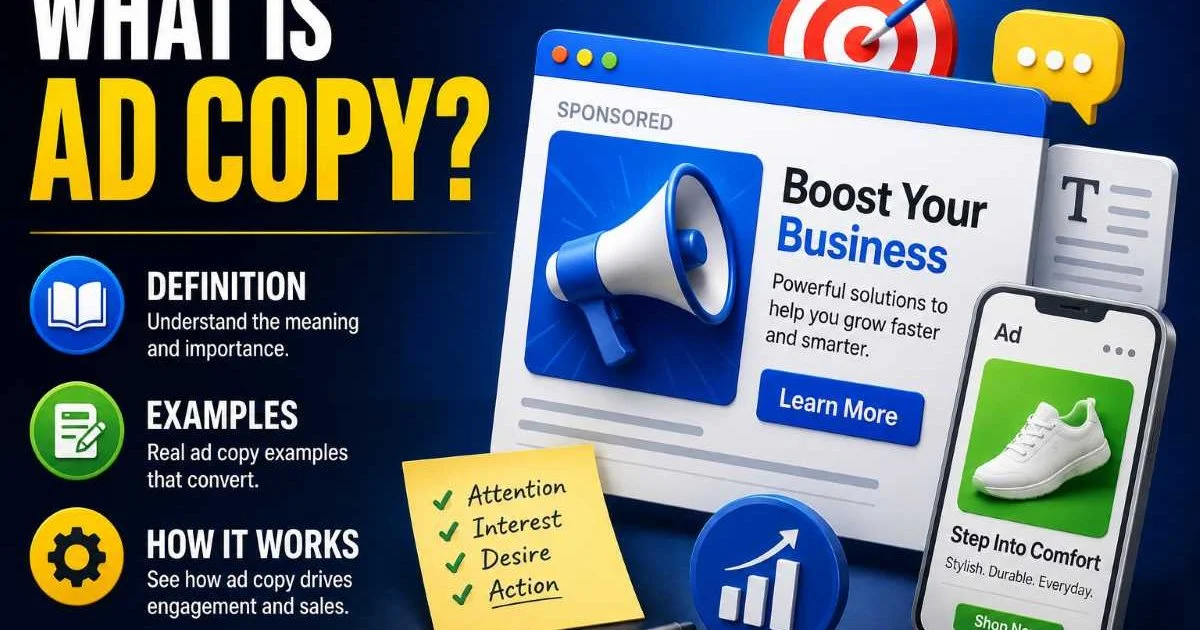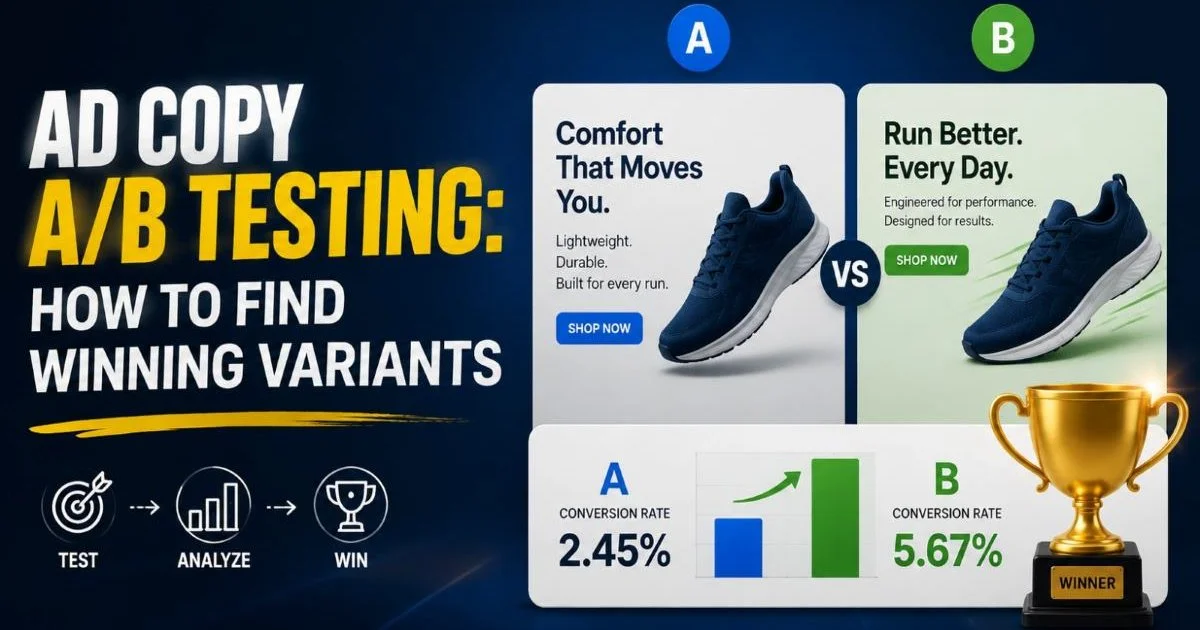
Ad copy A/B testing: how to find winning variants is the question that separates high-performing campaigns from expensive guesswork. Every dollar you spend on advertising without testing your copy is a bet made with incomplete information. The best marketers don't rely on intuition alone; they build systematic testing processes that reveal exactly which words, hooks, and calls to action resonate with their audience. Whether you're running campaigns on Facebook, Google, or LinkedIn, the principles of effective split testing remain consistent.
If you're still unclear on the foundations, understanding what ad copy is and how it works will give you the groundwork before you start testing. This guide walks you through a practical, step-by-step framework for designing, running, and analyzing A/B tests that produce reliable, actionable results. By the end, you'll have a repeatable system for identifying winners and scaling them profitably.
Key Takeaways
- Test one variable at a time to isolate what actually drives performance differences.
- Statistical significance matters more than early trends in your A/B test data.
- Start with high-impact elements like headlines and CTAs before testing minor details.
- Document every test result to build an institutional knowledge base over time.
- AI tools can generate diverse variants quickly, but human judgment guides final decisions.
Step 1: Define Your Hypothesis and Choose One Variable
Before you write a single word of variant copy, you need a clear hypothesis. A hypothesis isn't "let's see which ad works better." It's a specific, falsifiable statement like "Using a question-format headline will increase CTR by at least 15% compared to a statement-format headline." This precision forces you to think critically about what you're testing and why. Without it, you'll collect data but lack the framework to interpret results meaningfully.
The most common mistake in ad copy A/B testing is changing too many things at once. If your control ad says "Free Shipping on All Orders" and your variant says "Get Your Order Shipped Free, Shop Now," you've changed the structure, the voice, and added a CTA simultaneously. When one outperforms the other, you won't know which change drove the improvement. Isolating a single variable is non-negotiable for clean, actionable data.
Changing multiple elements at once makes your test results uninterpretable. Resist the temptation.
Picking the Right Variable to Test First
Not all ad elements carry equal weight. Headlines typically have the largest impact on click-through rates because they're the first thing users see. If you're working on ad headline writing formulas that drive clicks, testing headline variations should be your starting point. After headlines, CTAs tend to influence conversion rates most directly, followed by body copy, social proof elements, and offers.
Think of testing priority as a hierarchy. Start at the top where small changes produce the largest measurable effects. Once you've optimized your headline through several rounds of testing, move down to body copy and CTAs. This approach maximizes your return on testing investment because you're always working on the highest-impact lever available.
Step 2: Create Strong Ad Copy Variants
Your variants need to be genuinely different in approach, not just minor word swaps. If your control headline is "Save 20% on Running Shoes," a weak variant would be "Get 20% Off Running Shoes." A strong variant would be "Run Faster Without Breaking the Budget." The first pair tests semantics nobody cares about. The second pair tests a benefit-driven angle against a discount-driven angle, which produces actionable strategic insights regardless of the outcome.
When crafting variants for Facebook specifically, the dynamics shift because users are scrolling casually and your copy competes with personal updates and memes. Learning how to write Facebook ad copy that converts gives you platform-specific principles to apply when building your test variants. On Google, where intent is higher, your copy needs to match search queries tightly. You can find relevant Google Ads copy tips to lower your cost per click that inform how you build search ad variants.
Using AI to Speed Up Variant Generation
AI writing tools have become remarkably effective at generating diverse ad copy variants quickly. Rather than staring at a blank screen, you can use an AI ad copy generator to produce 10 or 15 headline variations in seconds, then curate the best options for testing. Choosing the best LLM for writing can make a significant difference in the quality and creativity of your generated variants. The key is to treat AI output as raw material, not finished copy.
The best workflow combines AI-generated breadth with human editorial judgment. Let the tool explore angles you might not have considered: questions, provocations, humor, fear-of-missing-out, direct benefit statements, and testimonial-style hooks. Then select the two or three that represent genuinely distinct approaches and refine them manually before launching your test. This hybrid process typically produces better variant diversity than either pure human brainstorming or pure AI generation alone.
Generate at least 10 AI variants, then shortlist 2 to 3 that represent truly different persuasion angles for testing.
Step 3: Run the Test with Proper Controls
Setting up a technically sound A/B test requires attention to several operational details. First, both variants must run simultaneously to the same audience. Running Variant A on Monday and Variant B on Tuesday introduces day-of-week bias that can invalidate results. Most ad platforms, including Meta Ads Manager and Google Ads, have built-in split testing features that handle traffic allocation automatically. Use them instead of manual scheduling.
Budget allocation is another area where marketers stumble. Each variant needs enough budget to generate statistically meaningful data. If you're testing two Facebook ad headlines with a $10 daily budget split between them, you might get 50 clicks per variant in a week. For many campaigns, that's not enough volume to reach confidence. A good rule of thumb: plan for at least 100 conversions (or 300 to 500 clicks, if testing CTR) per variant before drawing conclusions.
| Metric Being Tested | Minimum Sample Per Variant | Typical Test Duration |
|---|---|---|
| Click-Through Rate | 300 to 500 clicks | 5 to 10 days |
| Conversion Rate | 100 to 200 conversions | 7 to 21 days |
| Cost Per Acquisition | 50 to 100 acquisitions | 14 to 30 days |
| ROAS | 100+ purchases | 14 to 30 days |
How Long Should Your Test Run
Ending a test too early is the single biggest source of false positives in ad copy testing. You'll often see one variant "winning" after 24 hours, but this early signal frequently reverses by day five. The reason is simple: small sample sizes produce volatile metrics. A confidence level of 95% is the standard threshold, meaning there's only a 5% chance the observed difference is due to random variation. Free calculators like those from Optimizely or Evan Miller can tell you when you've reached this threshold.
"The most expensive mistake in A/B testing isn't picking the wrong variant; it's declaring a winner too early."
Environmental factors also affect timing. Avoid launching tests during holidays, major sales events, or other periods when audience behavior is atypical. If your test spans Black Friday, the data from that weekend will skew your overall results. Similarly, B2B advertisers should be wary of tests that include both weekdays and weekends without sufficient volume on each, since buying behavior often differs dramatically between the two.
Always check that your test didn't overlap with a major promotion or seasonal event before trusting the results.
Step 4: Analyze Results and Scale Winners
When your test reaches statistical significance, resist the urge to look only at the primary metric. A variant that boosted CTR by 22% but dropped conversion rate by 15% isn't a clear winner. Evaluate the full funnel impact by examining CTR, conversion rate, cost per conversion, and return on ad spend together. Ad copy A/B testing: how to find winning variants ultimately means finding the variant that improves your bottom-line metric, not just the one that gets more clicks.
Once you've identified a genuine winner, scale it gradually. Don't immediately 10x the budget on a winning variant. Increase spend by 20 to 30% every few days and monitor whether performance holds. Algorithms on platforms like Meta and Google need time to recalibrate their optimization when budgets change significantly. Rapid scaling can temporarily spike your CPA before the system stabilizes.
Building a Testing Knowledge Base
Every test you run, whether it produces a winner or a tie, should be documented. Create a simple spreadsheet or Notion database that records the hypothesis, the variants tested, the sample sizes, the results, and the confidence level. Over time, this knowledge base becomes extraordinarily valuable. You'll start noticing patterns: maybe question headlines consistently outperform statements in your niche, or urgency-based CTAs beat curiosity-based ones for your specific audience.
This documentation also prevents you from accidentally re-running tests you've already conducted. In larger teams, it's common for a new marketer to test "Shop Now" versus "Buy Now" without realizing the team settled that question six months ago. A shared testing log eliminates redundant experiments and lets every team member build on prior learnings. The cumulative advantage of systematic ad copy A/B testing compounds over months and years, giving disciplined teams a significant edge over competitors who test sporadically.
Tag each test result with the emotional angle tested (urgency, curiosity, fear, aspiration) to spot patterns across campaigns.
Frequently Asked Questions
?How do I write a hypothesis for an ad copy A/B test?
?Should I test headlines before CTAs in ad copy splits?
?How long does an ad copy A/B test need to run?
?What's the biggest mistake people make in ad copy split testing?
Final Thoughts
Ad copy A/B testing: how to find winning variants isn't a one-time project. It's an ongoing discipline that sharpens your marketing instincts and protects your ad budget from costly assumptions. Start with clear hypotheses, test one variable at a time, wait for statistical significance, and document everything.
The marketers who commit to this process don't just find better ads; they build a deep, data-backed understanding of what motivates their audience. That understanding, refined through dozens of tests, becomes your most durable competitive advantage.
Disclaimer: Portions of this content may have been generated using AI tools to enhance clarity and brevity. While reviewed by a human, independent verification is encouraged.